What Is Colorectal Cancer?
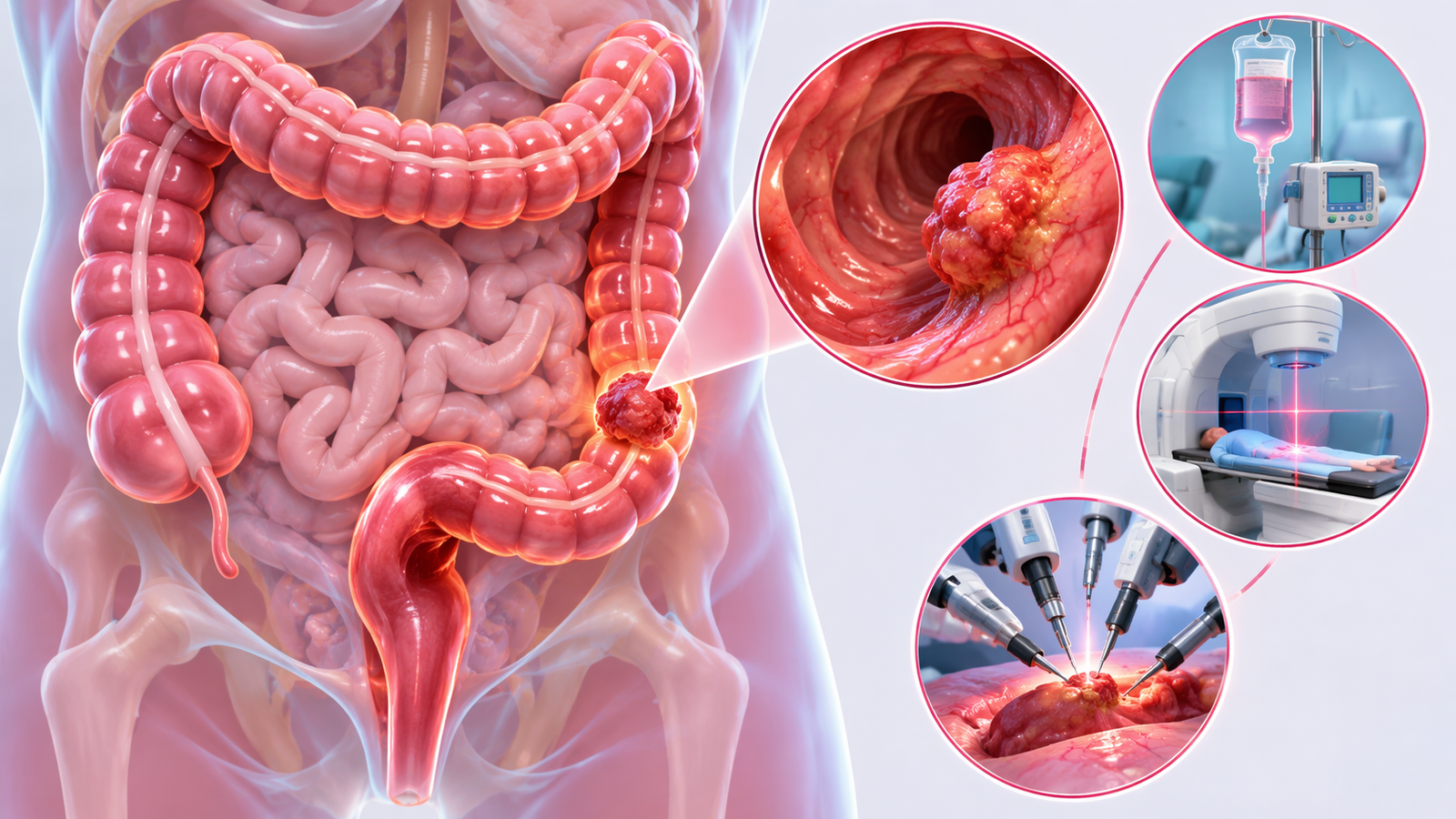
Colorectal cancer includes cancers of the colon and rectum. Many begin as polyps, some of which can develop into cancer over time. Screening can identify these changes before cancer develops or help detect cancer at an earlier stage. Polyp removal and colonoscopy are generally managed by a gastroenterologist or another appropriately trained clinician.
The treatment plan for colon or rectal cancer depends on the tumour's location, stage, overall health and test results. A medical oncologist helps determine whether systemic treatments such as chemotherapy, targeted therapy or immunotherapy may be appropriate.
Risk Factors for Colorectal Cancer
- Increasing age, with screening recommendations depending on individual risk and local guidance
- A family history of colorectal cancer or advanced polyps
- Inherited conditions such as Lynch syndrome or familial adenomatous polyposis
- A diet high in red or processed meat
- Overweight or obesity and limited physical activity
- Smoking and alcohol consumption
- Long-standing inflammatory bowel disease, including Crohn's disease and ulcerative colitis
Common Signs and Symptoms of Colorectal Cancer
Early colorectal cancer may not cause noticeable symptoms. Persistent changes in bowel habits, rectal bleeding or unexplained weight loss should be assessed by a healthcare professional. These symptoms can have several causes and do not necessarily mean that cancer is present.
- A persistent change in bowel habits, including diarrhoea or constipation
- Blood in the stool or bleeding from the rectum
- A feeling that the bowel has not emptied completely
- Ongoing abdominal pain, cramps or discomfort
- Unexplained weight loss, fatigue or weakness
Related: Read about early signs of cancer
Colorectal Cancer Screening and Diagnosis
Screening can detect colorectal cancer early and may prevent some cases by identifying polyps before they become cancerous. Depending on a person's risk and clinical circumstances, screening options may include colonoscopy and stool-based tests. CT colonography may be appropriate in selected situations. The recommended starting age and screening interval should be confirmed with a clinician, particularly when there is a family history or another risk factor.
If colorectal cancer is diagnosed, further investigations establish its stage and help guide treatment. Molecular tests may include KRAS and NRAS, BRAF, and mismatch repair (MMR) or microsatellite instability (MSI) testing. These results can help determine whether particular targeted medicines or immunotherapy may be suitable.
Colorectal Cancer Treatment Options
Colorectal cancer treatment depends on the stage, tumour location, molecular findings and the patient's overall health. Surgery is an important treatment for many localised cancers. Chemotherapy may be recommended before or after surgery in selected cases, or to treat cancer that has spread. The treatment sequence differs between colon and rectal cancer.
Targeted therapy may be considered when tumour characteristics indicate that a particular medicine is appropriate. Immunotherapy can be especially relevant for selected cancers with high microsatellite instability (MSI-H) or deficient mismatch repair (dMMR). Molecular testing helps the oncology team assess these options.
Care may involve medical oncology, surgical oncology, gastroenterology and radiation oncology. A medical oncologist coordinates the systemic treatment plan as part of the wider care team when these specialties are needed.
Related: Chemotherapy treatment, Targeted cancer therapy, Cancer immunotherapy, Precision oncology and molecular testing
Questions patients ask
Is colorectal cancer curable?
Colorectal cancer can often be treated with curative intent when it is diagnosed at an early stage. Treatment may also control more advanced disease for some people. The outlook depends on the stage, tumour characteristics, general health and response to treatment. An individual prognosis requires assessment by the treating team.
At what age should colorectal cancer screening start?
Screening recommendations vary by country, individual risk and medical history. Many guidelines recommend starting routine screening at around age 45 for people at average risk. People with a strong family history, inherited conditions or certain bowel diseases may need earlier or more frequent assessment. Confirm the appropriate schedule with a clinician.
Can colorectal cancer be prevented?
Screening and removal of precancerous polyps can prevent some colorectal cancers. Regular physical activity, maintaining a healthy weight, avoiding smoking, limiting alcohol and reducing processed meat intake may also help lower risk. These measures cannot eliminate the risk completely.
What tests help guide colorectal cancer treatment?
Diagnosis and treatment planning may involve colonoscopy, biopsy, imaging and staging investigations. Depending on the diagnosis, molecular tests such as KRAS, NRAS, BRAF and MSI or MMR testing can help determine whether certain targeted treatments or immunotherapy may be appropriate.
When should a medical oncologist be consulted for colorectal cancer?
A medical oncologist may be involved after diagnosis to discuss chemotherapy, targeted therapy, immunotherapy and other systemic treatment options. A consultation may also help when molecular test results are available or when another opinion on the treatment plan is desired.
Where can I consult Dr. Rajit Rattan for colorectal cancer treatment in Gurugram?
Patients seeking medical oncology advice can use the website's contact page to enquire about a consultation with Dr. Rajit Rattan in Gurugram. Bring relevant biopsy reports, scans, pathology results and previous treatment records, if available. Confirm the current appointment location and availability when enquiring.