
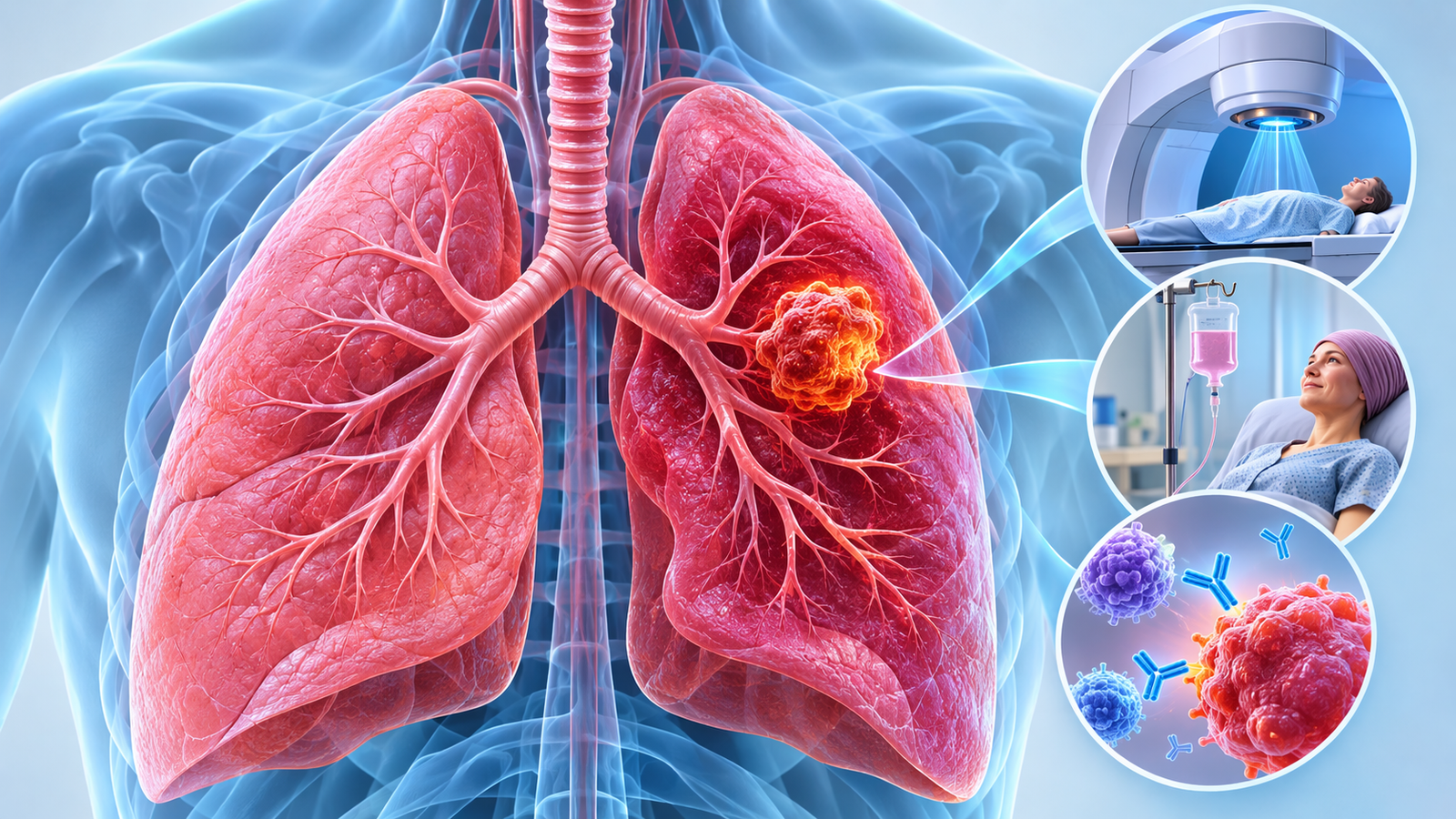
What lung cancer is
A tumour in the lung can interfere with breathing and can spread beyond the chest. Early diagnosis, when it is possible, widens the options. Advanced disease can still be treated, sometimes for a long time, when a targetable mutation or an immunotherapy-sensitive tumour is found. Neither situation should be described as a guaranteed outcome.
Symptoms that need assessment
Early lung cancer can be quiet. A symptom that continues should be examined. Smoking history raises concern, but the absence of smoking does not rule lung cancer out.
- A cough that lasts more than a few weeks
- Coughing up blood
- Chest pain or discomfort
- Breathlessness
- Unexplained weight loss
- Fatigue, or infections that keep returning
Related: Early signs that are easy to dismiss
Risk, including in non-smokers
Tobacco is the leading cause. It is not the only one. The practice specifically includes lung cancer in people who have never smoked, which is diagnosed often enough that it should not be dismissed.
- Smoking, and regular exposure to other people’s smoke
- Outdoor and indoor air pollution
- Workplace exposure, including asbestos and some industrial chemicals
- Radon
- An inherited predisposition in some families
The two broad types
- Non-small cell lung cancer is the more common group. It includes adenocarcinoma and squamous cell carcinoma, among others. Molecular testing is especially important here.
- Small cell lung cancer is less common and often faster growing. It usually needs prompt systemic treatment.
Diagnosis and molecular testing
Evaluation may include a chest X-ray, CT, PET-CT for staging, bronchoscopy, biopsy and molecular tests. Those procedures are done by the relevant diagnostic and pulmonary teams. The medical oncologist uses the reports — including EGFR, ALK, ROS1 and other markers when they are indicated — to decide between chemotherapy, targeted therapy, immunotherapy or a combination.
Related: Precision oncology
Systemic treatment
Chemotherapy remains a standard part of care for many people. Targeted tablets or infusions are used when a driver mutation is found. Immunotherapy is an important option in selected advanced non-small cell lung cancers, guided by biomarkers such as PD-L1 and by the clinical picture. Radiation and surgery are coordinated with those specialists when they are part of the plan.
Related: Chemotherapy, Immunotherapy, Targeted therapy, Oral cancer treatment
Questions patients ask
Can non-smokers develop lung cancer?
Yes. A substantial number of lung cancers occur in people who have never smoked, related to genetic changes, pollution and other exposures. Never-smoking is not a reason to ignore a persistent cough or chest symptom.
Is lung cancer curable?
Some early-stage lung cancers are curable with the right combination of treatments. Advanced disease is often not curable, but targeted therapy and immunotherapy have improved control and survival for many people. The stage and the molecular result matter more than a general statistic.
What decides between immunotherapy and a targeted drug?
The biopsy and molecular report. A driver mutation such as EGFR or ALK usually points toward a targeted drug. Other tumours may be considered for immunotherapy, sometimes with chemotherapy. The two are not interchangeable.