
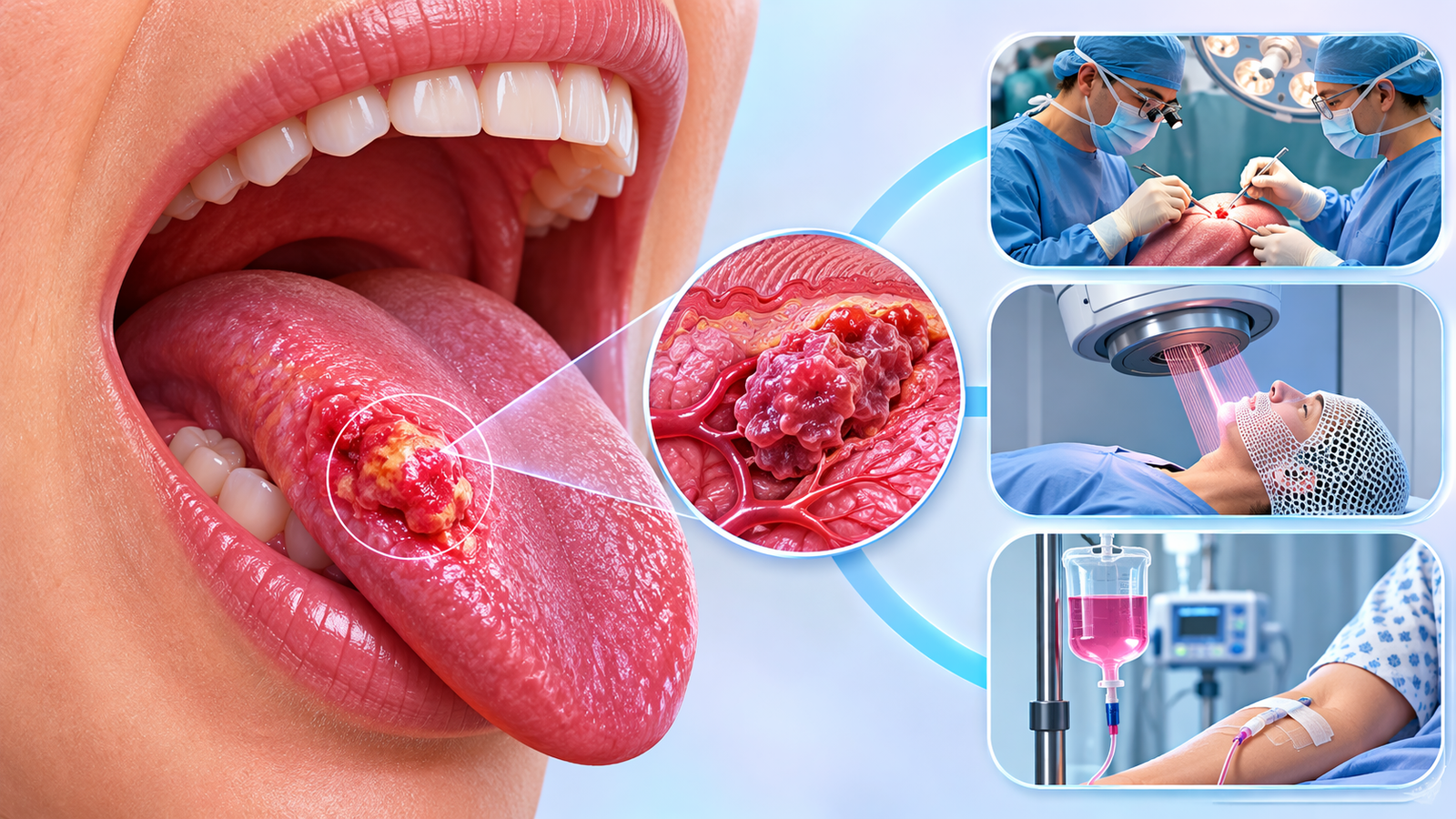
What Is Oral Cancer?
Oral cancer is a type of head and neck cancer that develops in the tissues of the mouth. It can affect the tongue, gums, inner lining of the cheeks, floor of the mouth, hard palate or other oral structures. Squamous cell carcinoma is the most common type.
Early assessment is important because treatment options depend on the cancer's location, size, stage and whether it has spread to nearby lymph nodes or other parts of the body. A dentist, oral and maxillofacial specialist, head and neck surgeon or ENT specialist may be involved in the initial evaluation.
Risk Factors for Oral Cancer
Oral cancer can occur in people without recognised risk factors. Avoiding tobacco and areca nut, limiting alcohol and seeking assessment for persistent oral changes can help reduce risk or support earlier detection.
- Tobacco use, including smoking and smokeless tobacco
- Betel quid or areca nut use, including paan preparations containing these ingredients
- Alcohol consumption, particularly alongside tobacco use
- Previous oral potentially malignant lesions, such as leukoplakia or erythroplakia
- A history of oral cancer or certain other head and neck cancers
Signs and Symptoms of Oral Cancer
An oral ulcer, lump or patch that does not heal should be examined, especially if it persists for around two weeks or longer. These changes can have non-cancerous causes, but an examination is important to determine whether further investigation is needed.
- A persistent mouth ulcer or sore that does not heal
- A red or white patch inside the mouth
- A lump, thickened area or unexplained growth in the mouth
- Persistent pain in the mouth or tongue
- Difficulty chewing, swallowing or moving the tongue
- Unexplained bleeding or numbness in the mouth or lip
- A lump in the neck or persistent voice changes
Related: Read about early signs of cancer
Oral Cancer Diagnosis and Staging
Evaluation usually begins with an examination of the mouth and neck. If an abnormal area is suspected, a biopsy is generally needed to confirm the diagnosis. Imaging, such as CT, MRI or PET-CT, may be recommended to assess the tumour and determine whether it has spread.
The results help the multidisciplinary team establish the stage and plan treatment. Additional tests may be considered in selected cases, depending on the tumour's features and whether the cancer is newly diagnosed or has returned.
Oral Cancer Treatment Options
Oral cancer treatment depends on the tumour's location, stage, extent and the patient's overall health. Surgery is an important option for many localised oral cancers. Radiation therapy may be recommended alone or in combination with other treatments, depending on the clinical situation.
Chemotherapy may be used alongside radiation, after surgery in selected cases, or for recurrent or advanced disease. Targeted therapy or immunotherapy may be appropriate for certain patients, particularly in specific recurrent or metastatic settings. These treatments are not suitable for every oral cancer and depend on clinical assessment and, where relevant, tumour biomarkers.
A medical oncologist works with head and neck surgeons, radiation oncologists, pathologists and other specialists to coordinate treatment when systemic therapy is needed. Decisions should also consider speech, swallowing, nutrition, pain control and rehabilitation.
Related: Chemotherapy treatment, Targeted cancer therapy, Cancer immunotherapy, Precision oncology, Palliative and supportive care
When to Consult a Cancer Specialist
Arrange a dental or medical assessment for a persistent mouth ulcer, unexplained patch, lump or other lasting change in the mouth. If a biopsy confirms oral cancer, the treating team can explain the stage and discuss the appropriate combination of surgery, radiation therapy and systemic treatment.
A medical oncology consultation may be useful when chemotherapy, immunotherapy or targeted therapy is being considered, or when a patient needs further explanation of a proposed systemic treatment plan.
Questions patients ask
What are the early signs of oral cancer?
Possible warning signs include a mouth ulcer that does not heal, red or white patches, a persistent lump, unexplained bleeding, ongoing mouth pain or difficulty swallowing. These symptoms do not automatically mean cancer, but persistent changes should be examined by a healthcare professional.
Where can I seek oral cancer treatment in Gurugram?
Oral cancer care may involve a head and neck surgeon, radiation oncologist and medical oncologist, depending on the diagnosis. Patients seeking medical oncology advice in Gurugram can use the contact page to enquire about a consultation with Dr. Rajit Rattan and confirm current appointment details.
Is oral cancer curable?
Some oral cancers can be treated with curative intent, particularly when diagnosed at an early stage. The outlook depends on the tumour's stage, location, pathology, overall health and response to treatment. An individual prognosis requires assessment by the treating team.
Does every oral cancer patient need chemotherapy?
No. Chemotherapy is not necessary for every oral cancer patient. Treatment may involve surgery, radiation therapy, systemic treatment or a combination, depending on the stage and clinical findings. The multidisciplinary team determines the most appropriate approach.
Can immunotherapy be used for oral cancer?
Immunotherapy may be an option for selected patients with recurrent or metastatic cancers of the oral cavity, depending on the clinical setting and relevant eligibility criteria. It is not appropriate for every patient, and the oncology team determines whether it should be considered.
Which doctor treats oral cancer?
Oral cancer treatment often involves a head and neck surgeon or another appropriately trained surgical specialist, a radiation oncologist and, when systemic treatment is required, a medical oncologist. The specialists work together according to the stage and treatment needs.
When should I get a mouth ulcer checked?
A mouth ulcer that does not heal within about two weeks, or an unexplained patch, lump or persistent change in the mouth, should be assessed by a dentist or doctor. Seek earlier assessment if it is worsening, bleeding repeatedly or accompanied by difficulty swallowing.