
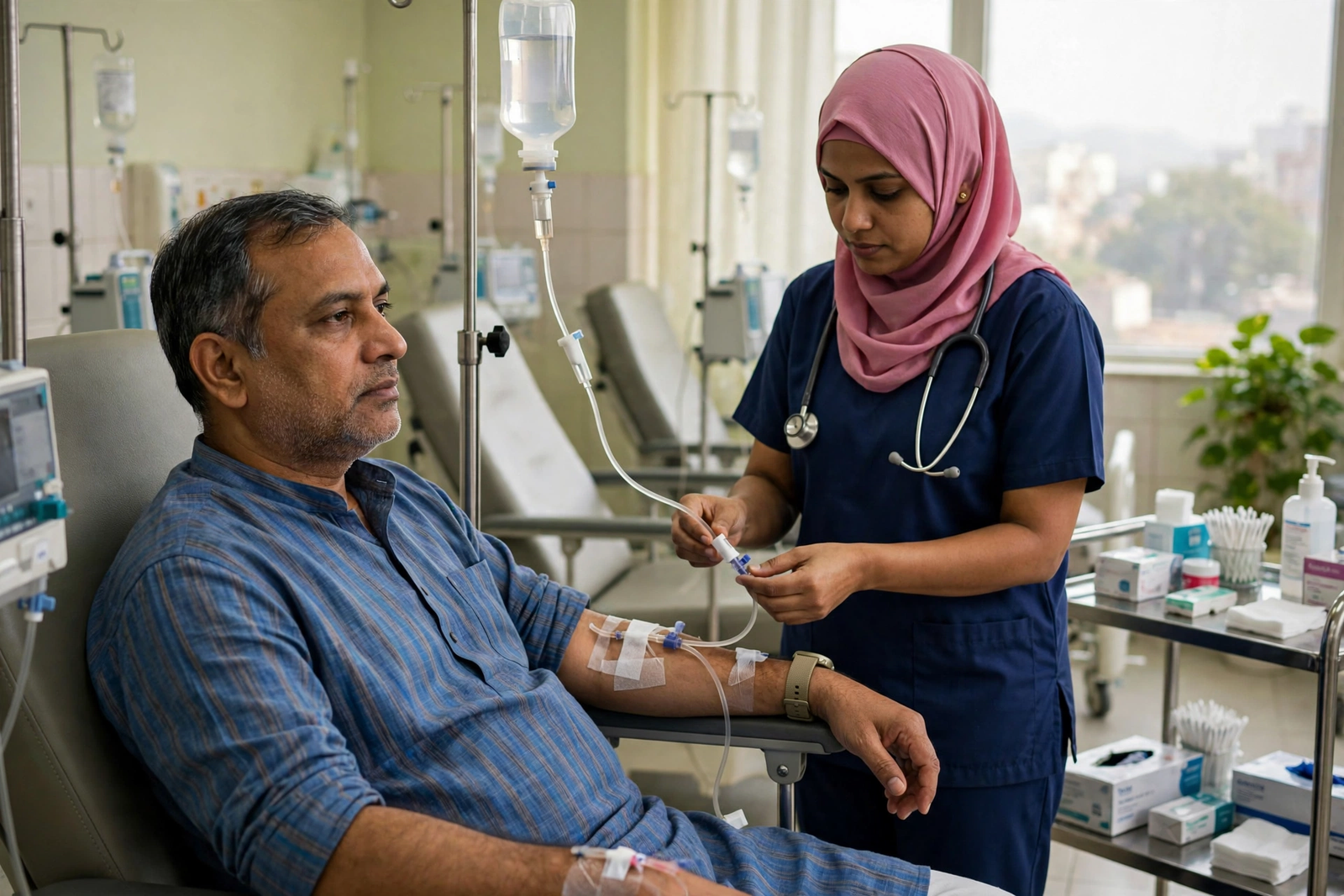
What Is Immunotherapy for Cancer?
Immunotherapy is a type of cancer treatment that helps the body's immune system recognise or respond to cancer cells. Some cancers evade immune detection by using signals that suppress immune activity. Certain immunotherapy medicines, including immune checkpoint inhibitors, block these signals and help immune cells attack the tumour.
Unlike conventional chemotherapy, which acts on rapidly dividing cells, immunotherapy works through specific immune pathways. The two approaches are different, and neither is automatically the better option for every cancer diagnosis.
Dr. Rajit Rattan provides medical oncology care in Gurugram, where treatment options may be assessed according to the cancer diagnosis, stage, pathology findings, relevant biomarkers and the patient's overall condition.
Types of Cancer Immunotherapy
The term immunotherapy covers several treatments. The type considered depends on the cancer, available clinical evidence, treatment setting and individual eligibility.
- Immune checkpoint inhibitors: medicines that block certain signals cancer cells use to evade immune responses.
- Monoclonal antibodies: laboratory-made antibodies that target specific proteins or pathways involved in cancer.
- Cancer vaccines and immune response modifiers: approaches used in selected cancers and clinical situations.
- Cell-based immunotherapy, including CAR-T cell therapy: specialised treatment used for selected conditions at appropriately equipped centres.
Which Cancers Can Be Treated With Immunotherapy?
Immunotherapy may be an option for selected patients with lung cancer, melanoma, kidney cancer, bladder cancer, head and neck cancer, Hodgkin lymphoma and certain other cancers. It can also be considered for some colorectal cancers with specific molecular features, including microsatellite instability-high (MSI-H) or mismatch repair deficiency (dMMR).
Whether immunotherapy is appropriate depends on the precise diagnosis, cancer stage, previous treatment, biomarker results and current treatment guidelines. A cancer type alone does not establish eligibility.
Related: Lung cancer, Colorectal cancer, Oral cancer
Who Is Eligible for Immunotherapy?
Immunotherapy eligibility depends on the cancer type and stage, previous treatments, overall health and, where relevant, biomarker testing. Tests such as PD-L1 expression, MSI status and mismatch repair (MMR) status may help determine whether particular medicines are suitable. Other biomarkers may be relevant for specific cancers and drugs.
For patients exploring immunotherapy treatment in Gurugram, a medical oncology assessment can help explain the available options, expected benefits, possible risks and whether immunotherapy may be used alone or in combination with chemotherapy or another treatment.
Immunotherapy Side Effects and Safety
Possible immunotherapy side effects include fatigue, skin rashes, itching, diarrhoea and inflammation affecting organs such as the lungs, liver, thyroid or bowel. These effects can occur when the immune system affects healthy tissue as well as cancer cells.
Immunotherapy side effects differ from chemotherapy side effects, but they are not necessarily milder. Some immune-related reactions can become serious and need prompt medical assessment. Patients should report new or worsening symptoms to their treating team rather than waiting for the next appointment.
The treatment schedule and duration depend on the medicine, cancer type, response to treatment and side effects. Regular monitoring helps the oncology team assess how treatment is working and manage potential complications.
Questions patients ask
What is immunotherapy for cancer?
Immunotherapy is a cancer treatment that helps the immune system recognise or attack cancer cells. Some medicines block immune checkpoint signals, while other approaches target specific cancer-related pathways. Its suitability depends on the cancer diagnosis and individual clinical findings.
Is immunotherapy better than chemotherapy?
Neither treatment is universally better. Immunotherapy can be effective for selected cancers, while chemotherapy, targeted therapy or a combination may be more appropriate for others. The decision depends on the cancer type and stage, biomarker results, previous treatment and overall health.
Which tests are needed before immunotherapy?
Testing depends on the cancer and the medicine being considered. It may include pathology review, imaging, PD-L1 testing, MSI or mismatch repair testing, and other relevant molecular or biomarker tests. Not every patient needs every test.
What are the common side effects of immunotherapy?
Possible side effects include fatigue, skin reactions, diarrhoea and inflammation involving organs such as the lungs, liver, bowel or thyroid. Some reactions can be serious, so new symptoms should be reported promptly to the treating oncology team.
How long does immunotherapy treatment take?
Treatment duration varies with the medicine, cancer type, response and side effects. Some treatment plans continue for a defined period, while others may need to be changed or stopped based on clinical findings.
Is immunotherapy for cancer available in Gurugram?
Immunotherapy may be considered as part of medical oncology care in Gurugram when clinically appropriate. Dr. Rajit Rattan's assessment can help determine whether this treatment is suitable for a patient's diagnosis and test results. Availability of a specific medicine or treatment should be confirmed directly with the treating centre.
How can I consult Dr. Rajit Rattan about immunotherapy in Gurugram?
Patients can use the direct appointment contact details provided on Dr. Rajit Rattan's website to enquire about a medical oncology consultation in Gurugram. Bring available pathology reports, scan results, previous treatment records and biomarker reports to help inform the assessment.