What Is Targeted Therapy for Cancer?
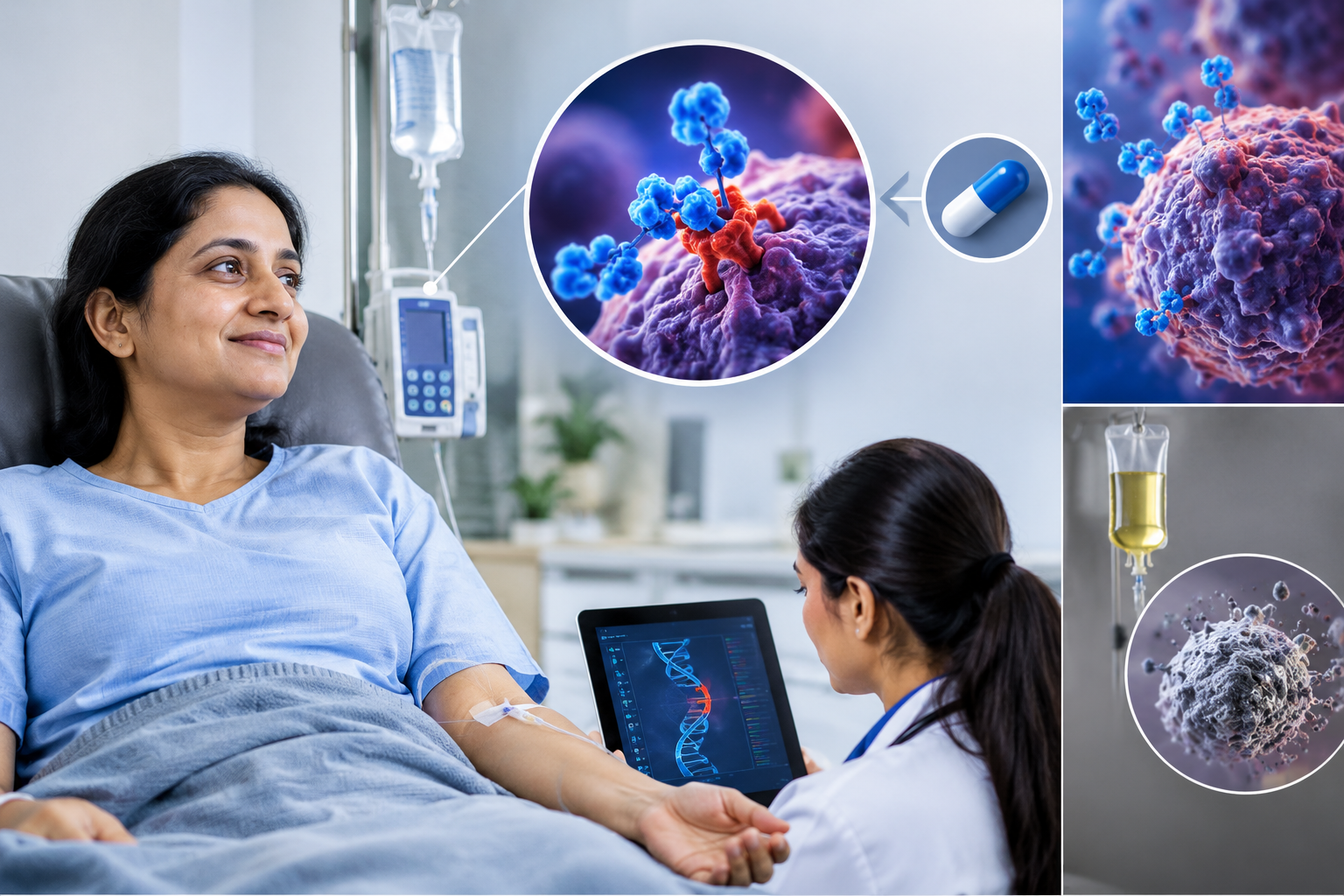
Targeted therapy is a type of cancer treatment designed to act on particular proteins, gene changes or biological pathways that help cancer cells grow and survive. Depending on the medicine, treatment may block signals inside cancer cells, interfere with tumour blood vessel formation or act on another specific cancer-related mechanism.
Unlike conventional chemotherapy, which affects many rapidly dividing cells, targeted medicines focus on defined biological features. However, they can still affect healthy tissues and cause significant side effects. They may also stop working if a cancer develops resistance.
Dr. Rajit Rattan's medical oncology care in Gurugram may include assessing molecular reports and available treatment options to determine whether targeted therapy is appropriate for an individual patient.
Molecular and Biomarker Testing Before Targeted Therapy
Molecular testing helps identify changes in a tumour that may guide treatment selection. Depending on the cancer, testing may involve tumour tissue, blood-based testing or next-generation sequencing (NGS). The appropriate test depends on the diagnosis and the clinical question being investigated.
Examples of biomarkers that may influence treatment decisions in particular cancers include EGFR, ALK, ROS1, HER2, KRAS, NRAS, BRAF and BRCA. This is not a universal testing panel; different cancers require different tests, and some targeted treatments depend on protein expression or other biomarkers.
If testing does not identify a relevant treatment target, a particular targeted medicine may not be beneficial. The findings can still help the oncology team evaluate other evidence-based treatment options.
Related: Precision oncology
Types of Targeted Cancer Treatment
Targeted treatment includes several groups of medicines. The choice depends on the cancer, the molecular target, previous treatment and evidence supporting the medicine's use.
- Tyrosine kinase inhibitors (TKIs), which block specific signals involved in cancer growth.
- Monoclonal antibodies that bind to particular proteins or targets on cancer cells.
- Angiogenesis inhibitors that interfere with the formation of blood vessels supplying a tumour.
- PARP inhibitors and other medicines used for selected cancers with relevant molecular changes.
- Hormone-directed treatments for hormone-sensitive cancers, including some breast and prostate cancers.
Which Cancers May Be Treated With Targeted Therapy?
Targeted therapy may be considered for selected patients with lung cancer, breast cancer, colorectal cancer, ovarian cancer, certain gastrointestinal cancers, thyroid cancer and some blood cancers. Its use depends on the specific molecular or protein features of the cancer.
For example, particular EGFR, ALK or ROS1 alterations may guide treatment in some lung cancers. HER2 status can influence treatment in selected breast cancers, while certain RAS, BRAF or other molecular findings may affect treatment decisions in colorectal cancer.
Some oral cancers may have treatment options guided by specific biomarkers or other clinical findings, but targeted therapy is not appropriate for every oral cancer diagnosis. Treatment decisions should be based on the individual pathology report, disease stage and relevant testing.
Related: Lung cancer, Breast cancer, Colorectal cancer, Oral cancer
How Is Targeted Therapy Given?
Depending on the medicine, targeted therapy may be taken as tablets or capsules, administered by infusion, or used alongside another cancer treatment. The schedule and duration vary by drug and diagnosis.
Possible side effects include skin rash, diarrhoea, fatigue, high blood pressure and changes in liver function. Other risks depend on the medicine. Regular monitoring helps the treating team assess response, manage adverse effects and identify whether a change in treatment is needed.
Targeted therapy does not guarantee a cure or a response. The expected benefits and risks should be discussed before starting treatment.
Questions patients ask
What is targeted therapy for cancer?
Targeted therapy uses medicines that act on specific proteins, gene changes or pathways involved in cancer growth. It may be considered when the cancer has a relevant target and there is evidence that a particular medicine could help.
How is targeted therapy different from chemotherapy?
Chemotherapy acts on many rapidly dividing cells, while targeted therapy focuses on particular cancer-related targets or pathways. The treatments have different uses and side effects, and targeted therapy generally requires evidence that the relevant target is present.
Which tests are needed before targeted therapy?
Testing depends on the cancer type and suspected treatment target. It may include molecular profiling, next-generation sequencing, individual gene tests or protein biomarker tests performed on tumour tissue or, in selected situations, blood.
Is targeted therapy suitable for every cancer patient?
No. Suitability depends on the cancer diagnosis, stage, relevant molecular or protein findings, previous treatment and the evidence for the proposed medicine. Not every cancer has an actionable target.
Can targeted therapy treat lung, breast or colorectal cancer?
Targeted medicines are used for selected lung, breast and colorectal cancers when the relevant biomarker or molecular findings support their use. The specific medicine depends on the cancer subtype, test results and clinical circumstances.
Can targeted therapy be used for oral cancer?
Some oral cancers may have treatment options informed by particular biomarkers or molecular findings, but targeted therapy is not suitable for every case. An oncology assessment is needed to determine whether testing or a targeted medicine is relevant.
Is targeted therapy available in Gurugram?
Targeted therapy may be considered as part of medical oncology care in Gurugram when appropriate for the diagnosis and test results. Patients should confirm the availability of a specific medicine and treatment service directly with the treating centre.
How can I consult Dr. Rajit Rattan about targeted therapy?
Use the direct appointment contact details on Dr. Rajit Rattan's website to enquire about a medical oncology consultation in Gurugram. Bring available pathology reports, scan results, previous treatment records and molecular or biomarker reports.